
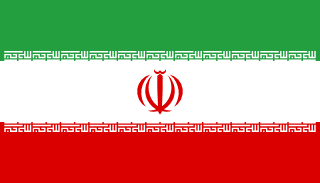
Afghanistan–Iran border
A desert border from the Hari Rud south to Pakistan, drawn through four arbitrations, three British and one Turkish. The line itself is settled, but the Helmand River, which crosses it into Iran’s Sistan, has been fought over for decades, and in 2025 hundreds of thousands of Afghans were pushed back across it.
Written from cited sourcesLast checked 29 September 2026Suggest a correction
See it on the globe:Afghanistan →Iran →
Four arbitrations
Under the 1857 Treaty of Paris, Persia agreed to refer disputes with Afghanistan to Britain. Sir Frederick Goldsmid’s award of 1872 put the southern boundary along the main channel of the Helmand; Major General C. S. MacLean fixed the northern line with 39 pillars in 1888–91; and after the Helmand changed course in 1896, Sir Henry McMahon re-drew the southern section and placed 90 markers by 1905. The last gap was settled by the Turkish general Fahreddin Altay in 1935, who confirmed that the Hari Rud’s thalweg forms the northern end. By 1961 the 550-mile line was marked by 172 pillars.[1]
The US Geographer noted that while the physical line had long been accepted, the waters of the Helmand, vital to the people of Sistan, had long been a bone of contention.[1]
“The waters of the Helmand River have long been a bone of contention between Afghanistan and Iran.”[1]
Water and returnees
A 1973 treaty requires Afghanistan to share 850 million cubic metres of Helmand water a year with Iran. As drought deepened in Iran and dams rose upstream, Iran’s president, Ebrahim Raisi, accused the Taliban in May 2023 of restricting the flow; the Taliban denied it. Late that month guards clashed at a border post in Nimroz, killing at least two Iranian and one Afghan guard, and each side blamed the other.[2]
In 2025 Iran told Afghans without the right to remain to leave by 6 July or face expulsion. More than 700,000 had left by then, many through the Islam Qala crossing, though the government denied targeting Afghans.[3]
Timeline
1872
Goldsmid award
The Helmand is made the southern boundary.[1]
1905
McMahon demarcation
90 markers are placed in the south.[1]
193515 May 1935
Altay award
A Turkish general settles the last section.[1]
1973
Helmand treaty
Water sharing is agreed.[2]
2023May 2023
Border clash
Guards exchange fire amid the water dispute.[2]
20256 July 2025
Deadline
Iran orders undocumented Afghans to leave.[3]
More borders
Sources
- [1]International Boundary Study No. 6: Afghanistan – Iran Boundary · US Department of State, Office of the Geographer · 20 June 1961
- [2]What caused deadly Afghan-Iran border clashes? What happens next? · Al Jazeera · 30 May 2023
- [3]Iran tells millions of Afghans to leave or face arrest on day of deadline · Al Jazeera · 6 July 2025
Map geometry from Natural Earth via world-atlas. See credits.