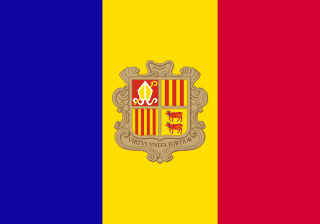
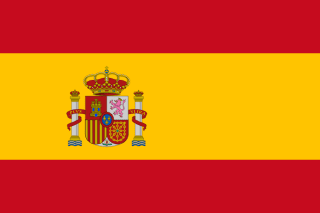
Andorra–Spain border
Andorra’s southern and western border, running through the high Pyrenees towards Catalonia. One of Andorra’s two co-princes is the Spanish bishop of Urgel, a link that dates back to a medieval quarrel over the valleys.
Written from cited sourcesLast checked 29 September 2026Suggest a correction
See it on the globe:Andorra →Spain →
Two princes
Tradition credits Andorra’s independence to Charlemagne, who took the region from the Muslims in 803, and to his son Louis the Pious. His grandson Charles II gave Andorra to the counts of Urgel, from whom it passed to the bishops of Urgel. In the late 13th century a quarrel between the Spanish bishops of Urgel and the French heirs to the countship produced Andorra’s dual allegiance to two princes, one in Spain and one in France.[1]
The system lasted until a constitution of 1993 greatly reduced the co-princes’ powers; they remain heads of state, now largely ceremonial. Andorra joined the United Nations the same year.[1]
“Andorra’s dual allegiance to two princes, one in Spain and one in France, originated in the late 13th century”[1]
Looking to Catalonia
Andorra has long been close to Catalonia across the Spanish border: its official language is Catalan, its institutions are based on Catalan law, and it belongs to the diocese of Urgel. About half of its residents are foreign nationals, mainly from Spain, France and Portugal. With no railway, it relies on roads to France and Spain and a small airport at Seo de Urgel in Spain, and its duty-free shops draw shoppers from across Europe.[1]
Timeline
More borders
Sources
- [1]Andorra · Encyclopaedia Britannica
Map geometry from Natural Earth via world-atlas. See credits.