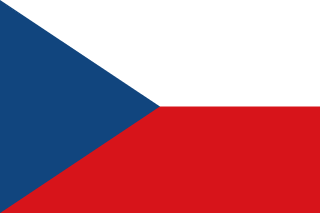

Czechia–Poland border
A mountain line along the Sudetes and Beskids that splits the old region of Silesia. Its most bitter stretch is at Cieszyn, a town divided by the Olza river since 1920, which Poland seized in 1938 and had to give back in 1945.
Written from cited sourcesLast checked 29 September 2026Suggest a correction
See it on the globe:Czechia →Poland →
Silesia and Teschen
Silesia passed to the Bohemian crown in 1335 and to the Habsburgs in 1526, and Prussia took most of it in 1742. The duchy of Teschen stayed Habsburg until Austria-Hungary collapsed in 1918.[3][1] In 1945 the Allies assigned nearly all of Silesia to Poland, and more than three million Germans left; a small part of historical Silesia remains in Czechia.[3]
After World War I both new states claimed Teschen, one of Austria-Hungary’s richest industrial regions. Poland pointed to its prewar population, 55% Polish; Czechoslovakia made historical arguments, and in January 1919 its troops occupied much of the region by force. On 28 July 1920 the Allies’ Conference of Ambassadors split Teschen along the Olza (Olše) river. Poland got the eastern districts and the city of Teschen; Czechoslovakia got a larger area with Karviná, the coalfield, the main railway and a sizeable Polish population.[1]
Seized and returned
Poland accepted the split while facing a Soviet offensive in 1920, but it remained dissatisfied, and relations stayed strained for almost 20 years. At the time of the Munich crisis, on 29 September 1938, Poland demanded Czechoslovakia’s part of Teschen and occupied it by early October.[1] Germany annexed the whole region in 1939.[2]
After World War II Poland tried to keep all of Teschen, but in June 1945 the Soviet Union intervened and forced the return of the 1920–38 border.[1] The Olza still divides the town: Cieszyn on the Polish side and the newer Český Těšín on the Czech side.[2]
The Turów mine
The Turów coal mine lies on the Polish side near the border with Czechia. Czechia took Poland to the EU Court of Justice over Poland’s extension of the mine’s life, and in February 2022 the two governments settled: Poland agreed to pay €45 million for infrastructure upgrades and environmental safeguards, and Czechia withdrew its complaint.[4]
Timeline
1742
Prussia takes Silesia
Teschen stays with the Habsburgs.[1]
1919January 1919
Czech occupation
Czechoslovak troops occupy much of Teschen.[1]
192028 July 1920
Teschen divided
The Conference of Ambassadors splits the region along the Olza.[1]
1938October 1938
Polish occupation
Poland takes the Czech part of Teschen.[1]
1945
Line restored
Soviet pressure returns the 1920 border; Silesia goes to Poland.[1][3]
2022February 2022
Turów settlement
Poland pays €45 million to end a mine dispute.[4]
More borders
Sources
- [1]Teschen · Encyclopaedia Britannica (Wayback Machine copy)
- [2]Cieszyn · Encyclopaedia Britannica (Wayback Machine copy)
- [3]Silesia · Encyclopaedia Britannica (Wayback Machine copy)
- [4]Poland and Czech Republic sign deal to end Turów mine dispute · Mining Technology · 4 February 2022
Map geometry from Natural Earth via world-atlas. See credits.