Taiwan
An island that has governed itself, as the Republic of China, since the Nationalist government retreated there in 1949. The People’s Republic of China claims it as part of its territory, most countries have no formal ties with it, and its status has never been settled.
Written from cited sourcesLast checked 26 September 2026Suggest a correction
See it on the globe: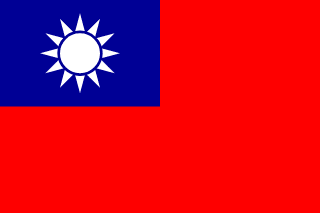 Taiwan →
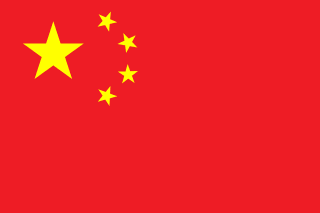 China →
From Japanese colony to Chinese province
China ruled Taiwan for about two centuries from the late 17th century.[1] After losing a war with Japan, it signed the Treaty of Shimonoseki in 1895, which ceded Taiwan and the P’eng-hu Islands to Japan in perpetuity.[4] Western powers treated the treaty as binding; China saw it as imposed under duress.[4]
In the declaration after the Cairo Conference of 1943, the United States and Britain agreed with the Chinese Nationalist leader Chiang Kai-shek that Taiwan had been taken from China and would be returned; the Potsdam Conference of 1945 confirmed it.[4] Taiwan became part of the Republic of China on 25 October 1945, but a formal legal settlement of its status was left for a peace treaty.[5][4]
Nationalist rule began badly. On 28 February 1947 government agents fired into an angry crowd, and unrest spread across the island. Troops sent from the mainland in March killed thousands.[5]
Two governments, one seat
In late 1949 Mao Zedong’s communist armies won China’s civil war. Chiang, his government and army fled to Taiwan, some 1.5 million people in all.[5] The People’s Republic of China ruled the mainland and the Republic of China ruled Taiwan. Taipei went on claiming the mainland, and Beijing claimed Taiwan.[1]
When the Korean War broke out in June 1950, US President Harry Truman sent the Seventh Fleet into the Taiwan Strait to prevent an invasion. The United States and its allies backed Taipei’s claim to represent China at the United Nations.[5] Two crises in the 1950s over Kinmen (Quemoy) and Matsu, islands held by Taipei just off the mainland, led to a US–Taiwan mutual-defense treaty in 1954.[5]
On 25 October 1971 the UN General Assembly passed resolution 2758. It recognised the People’s Republic’s representatives as “the only legitimate representatives of China” and expelled “the representatives of Chiang Kai-shek”.[3] The resolution does not mention Taiwan by name.[3] Taiwan’s government kept its claim to the mainland until the early 1990s, when it dropped it.[1]
“Decides to restore all its rights to the People’s Republic of China and to recognize the representatives of its Government as the only legitimate representatives of China to the United Nations, and to expel forthwith the representatives of Chiang Kai-shek from the place which they unlawfully occupy at the United Nations and in all the organizations related to it.”[3]
Washington switches
On 15 December 1978 President Jimmy Carter announced that the United States would establish diplomatic relations with the People’s Republic on 1 January 1979.[6] It acknowledged “the Chinese position that there is but one China and Taiwan is part of China”, said it would end the 1954 defense treaty, and promised to keep “cultural, commercial, and other unofficial relations with the people of Taiwan.”[6] Other countries then hurried to switch their own recognition to Beijing.[7]
Congress answered with the Taiwan Relations Act, approved on 10 April 1979.[8] It says US ties with Beijing rest on the expectation that Taiwan’s future will be settled by peaceful means, and commits the United States to provide Taiwan with “arms of a defensive character.”[8]
“to consider any effort to determine the future of Taiwan by other than peaceful means, including by boycotts or embargoes, a threat to the peace and security of the Western Pacific area and of grave concern to the United States”[8]
Democracy, and a law in Beijing
Taiwan ruled under martial law until 1987. The opposition Democratic Progressive Party (DPP) formed in 1986.[7] In 1996 Lee Teng-hui won the island’s first direct presidential election.[7] Chinese missile tests in the Taiwan Strait in 1995 and 1996 led President Bill Clinton to send US warships there.[7]
On 14 March 2005 China’s National People’s Congress adopted the Anti-Secession Law.[9] It says Taiwan is part of China, and that Beijing “shall employ non-peaceful means” if forces for independence move to separate Taiwan, or if the possibilities for peaceful reunification are “completely exhausted”.[9]
Pressure since 2016
Tsai Ing-wen of the DPP won the presidency in January 2016 and again in 2020.[10] In August 2022 US House Speaker Nancy Pelosi became the highest-ranking elected US official to visit Taiwan in about 25 years, over Beijing’s strong warnings.[10] On 13 January 2024 Tsai’s vice president, Lai Ching-te, won, the first time one party had won three presidential elections in a row since Taiwan became a democracy.[10]
On 29 December 2025 China began large drills around the island, code-named “Justice Mission 2025”. They rehearsed a blockade of its main ports, with live rockets fired into the surrounding waters.[11] It was the sixth time since Pelosi’s visit that China had staged large-scale drills around Taiwan. They came days after the United States announced a $11.1bn weapons package for the island.[11]
China says Taiwan is part of its territory with no right to relations between states, a position Taiwan’s government strongly disputes. Beijing has slowly reduced the number of countries with formal ties to Taipei, which stood at 12 in May 2026.[2]
Timeline
1895
Treaty of Shimonoseki
China cedes Taiwan and the P’eng-hu Islands to Japan.[4]
194525 October 1945
Retrocession Day
Taiwan becomes part of the Republic of China after Japan’s defeat.[5]
194728 February 1947
2-2-8
Government agents fire into a crowd, setting off an island-wide revolt, which troops crush in March.[5]
1949
Retreat to Taiwan
Chiang Kai-shek’s government flees the mainland for Taiwan.[5]
1954
Defense treaty
The United States and Taiwan sign a mutual-defense treaty.[5]
197125 October 1971
Resolution 2758
The People’s Republic takes China’s seat at the United Nations.[3]
19791 January 1979
US recognises Beijing
The United States opens diplomatic relations with the People’s Republic.[6]
197910 April 1979
Taiwan Relations Act
Congress keeps unofficial ties and arms sales to Taiwan in law.[8]
1987
Martial law ends
Chiang Ching-kuo lifts martial law and the ban on travel to the mainland.[7]
1996
First direct election
Lee Teng-hui wins Taiwan’s first direct presidential vote.[7]
200514 March 2005
Anti-Secession Law
China’s parliament provides for “non-peaceful means” against a move to independence.[9]
202413 January 2024
Lai Ching-te elected
The DPP wins a third presidential election in a row.[10]
202529 December 2025
Justice Mission 2025
China begins drills rehearsing a blockade of Taiwan.[11]
More disputed places
Sources
- [1]Taiwan · Encyclopaedia Britannica
- [2]Factbox: Taiwan’s 12 remaining diplomatic allies · Reuters (via Yahoo News) · 2 May 2026
- [3]Resolution 2758 (XXVI): Restoration of the lawful rights of the People’s Republic of China in the United Nations · UN General Assembly · 25 October 1971
- [4]Taiwan: Taiwan as part of the Japanese empire · Encyclopaedia Britannica
- [5]Taiwan: Early Nationalist rule · Encyclopaedia Britannica
- [6]China Policy (Milestones: 1977–1980) · Office of the Historian, US Department of State
- [7]Taiwan: Successors to Chiang Kai-shek · Encyclopaedia Britannica
- [8]Taiwan Relations Act (Public Law 96-8) · American Institute in Taiwan · 10 April 1979
- [9]Anti-Secession Law (full text) · Embassy of the People’s Republic of China in the United States · 14 March 2005
- [10]Taiwan: The Tsai Ing-wen presidency · Encyclopaedia Britannica
- [11]China fires several rockets around Taiwan during live military drills · Al Jazeera · 30 December 2025
Map geometry from Natural Earth via world-atlas. See credits.