American Samoa
The one place where being born on US soil makes you a US national but not a US citizen. People born there can live and work anywhere in the United States, but cannot vote there, and in 2022 the Supreme Court left that rule in place.
Written from cited sourcesLast checked 26 October 2026Suggest a correction
See it on the globe: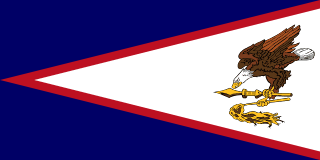 American Samoa →
 United States →
The eastern islands
American Samoa is the part of the Samoan islands east of 171° W, in the South Pacific about 3,500 km southwest of Hawaii. The independent country of Samoa, about 130 km to the west, holds the islands west of that line.[2]
Its main island, Tutuila, covers 135 km² and is nearly cut in two by Pago Pago Harbor. The capital, Pago Pago, is there. The Manu’a group lies about 100 km to the east, and Swains Island, a separate coral atoll about 450 km northwest of Tutuila, was added in 1925.[2] More than nine in ten people are Samoan. The extended family, headed by a chief called a matai, is the basic unit of society, and councils of matai run village affairs.[2][1]
How it became American
In 1878 the United States signed a treaty for a naval station in Pago Pago Harbor. An 1899 agreement between the colonial powers split Samoa: Germany took the western islands and the United States the eastern ones.[5]
On 17 April 1900 the chiefs of Tutuila and Aunu’u signed an instrument ceding their islands to the United States, and on 14 July 1904 the chiefs of Manu’a did the same.[3] Congress did not formally accept the deeds of cession until 20 February 1929. The US Navy ran the islands from 1900 to 1951, when the Department of the Interior took over.[5]
Congress never passed an act setting up a government for the territory. Instead the Interior Department let American Samoa write its own constitution in 1967. Voters approved electing their own governor in 1976, and the first elected governor, Peter Coleman, took office in 1977. The legislature, the Fono, has an elected House of Representatives and a Senate still chosen by councils of chiefs.[1][5]
Nationals, not citizens
People born in Puerto Rico, Guam, the US Virgin Islands and the Northern Mariana Islands are US citizens, because Congress passed laws making them so. Congress has passed no such law for American Samoa.[2] Federal law instead lists it as an “outlying possession” and says people born there are “nationals, but not citizens, of the United States at birth”.[3]
As nationals they can enter, live and work in the United States, but they cannot vote there.[2][1] The plaintiffs in a later court case listed other limits: living in Utah, they could not sit on a jury or become police officers, and their US passports carried a note saying they were not citizens.[3]
“nationals, but not citizens, of the United States at birth”[3]
The court case
In 2018 three people born in American Samoa and living in Utah, led by John Fitisemanu, sued. They argued that the Fourteenth Amendment makes everyone born “in the United States” a citizen, and that a territory counts. The American Samoa government and its delegate in Congress, Aumua Amata, joined the case on the other side. A federal district court in Utah agreed with the plaintiffs.[3]
In June 2021 a divided panel of the Tenth Circuit Court of Appeals reversed that ruling. It relied on the Insular Cases, a series of early-1900s Supreme Court decisions about territories, and pointed to the role of the Samoan way of life, the fa’a Samoa, and the wishes of the territory’s elected leaders.[6][3] The court refused to rehear the case in December 2021, over the dissent of two judges.[7] On 17 October 2022 the Supreme Court declined to take it.[4]
Fitisemanu called the outcome “a punch in the gut”. Amata welcomed it, saying it helped protect family land and matai heritage, and said any change should come from Congress.[6]
Timeline
1878
Naval station
The United States signs a treaty for a station in Pago Pago Harbor.[5]
1899
Samoa split
Germany takes the western islands and the United States the eastern ones.[5]
190017 April 1900
Tutuila ceded
The chiefs of Tutuila and Aunu’u cede their islands to the United States.[3]
190414 July 1904
Manu’a ceded
The chiefs of the Manu’a islands follow.[3]
1925
Swains Island
The atoll is made part of American Samoa.[2]
192920 February 1929
Congress accepts
Congress formally accepts the deeds of cession.[5]
1951
Navy leaves
The Department of the Interior takes over from the US Navy.[5]
1967
Constitution
American Samoa adopts its own constitution.[1]
1977
Elected governor
Peter Coleman becomes the first elected governor.[5]
2021
Appeals ruling
The Tenth Circuit rules against birthright citizenship for American Samoa.[6]
202217 October 2022
Supreme Court declines
The justices refuse to hear Fitisemanu v. United States.[4]
More map oddities
- Akrotiri and Dhekelia
- Andorra, the country with two princes
- Antarctica’s claims
- Baarle-Hertog and Baarle-Nassau
- Baikonur
- Baja California, one peninsula, two states
- Bir Tawil
- Borneo
- Bouvet Island
- Brčko District
- Büsingen and Campione d’Italia
- Cabinda
- Ceuta and Melilla
- Clipperton Island
- Doubly landlocked countries
- Guantánamo Bay
- Heard Island and McDonald Islands
- Hong Kong
- Jungholz
- Kaliningrad
- Kazungula
- Lake Constance
- Lakshadweep
- Lampedusa
- Liberland
- Llívia
- Macau
- Macquarie Island
- Madha and Nahwa
- Märket
- Molossia
- Montserrat
- Musandam
- Neum
- Neutral Moresnet
- Newfoundland, the country that joined Canada
- Oecusse
- Pheasant Island
- Point Roberts and the Northwest Angle
- Quintana Roo, the territory that kept disappearing
- Russian America
- Saint Martin, one island, two countries
- Sealand
- Slowjamastan
- Svalbard
- Temburong
- The Cooch Behar enclaves
- The Cyprus Green Line
- The Diomede Islands
- The Fergana Valley enclaves
- The International Date Line
- The Isle of Man and the Channel Islands: not part of the UK
- The Order of Malta
- The Siliguri Corridor
- The Suwałki Gap
- The Torres Strait Islands
- The Vennbahn
- The world’s exclaves
- Treriksröset
- Tsushima, the island between Japan and Korea
- Vatican City
- When Western Australia voted to leave Australia
Sources
- [1]American Samoa: Government and society · Encyclopaedia Britannica
- [2]American Samoa · Encyclopaedia Britannica
- [3]Fitisemanu v. United States, petition for a writ of certiorari, No. 21-1394 · Supreme Court of the United States (filed by the plaintiffs) · 27 April 2022
One side’s brief; used for the documents it quotes and the case’s history.
- [4]Docket No. 21-1394, Fitisemanu v. United States · Supreme Court of the United States
- [5]American Samoa: History · Encyclopaedia Britannica
- [6]Supreme Court skips over American Samoa’s citizenship case · Pacific Island Times · 17 October 2022
- [7]Fitisemanu v. United States, Nos. 20-4017 and 20-4019, order denying rehearing en banc · United States Court of Appeals for the Tenth Circuit · 27 December 2021
Map geometry from Natural Earth via world-atlas. See credits.