Nevis
Nevis is the smaller island of Saint Kitts and Nevis, and the only one with its own parliament and government. The constitution even lets it leave. In 1998, 61.7% of Nevisians voted to go, but the rules required two-thirds, and the movement has faded since.
Written from cited sourcesLast checked 9 October 2026Suggest a correction
See it on the globe: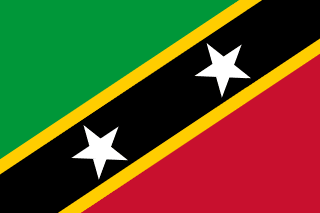 Saint Kitts and Nevis →
Run from Basseterre
From 1882 Saint Kitts, Nevis and Anguilla were one colonial unit, run from Basseterre on Saint Kitts. Nevisians have long seen the relationship as one of domination and discrimination.[2] On 27 February 1967 the three islands became a state associated with Britain, with full internal self-government. Anguilla threw out the Saint Kitts police that May and was formally separated in 1980.[4]
For Nevis a turning point came on 1 August 1970, when the government ferry Christena sank and 223 people died, most of them Nevisians. Many in Nevis saw it as proof that Saint Kitts didn’t care about them.[2] The Nevis Reformation Party was founded the same year to take the island out.[2]
A right to leave
In the early 1980s the Nevis Reformation Party governed with a Saint Kitts party and shelved independence, but it got a secession clause written into the constitution.[2] Saint Kitts and Nevis became independent as a federation on 19 September 1983.[4] Nevis has its own premier and legislature, and the constitution provides for it to secede if certain procedures are followed.[1]
The procedure is demanding. Two-thirds of the elected members of the Nevis Island Assembly must back a secession bill, detailed plans for Nevis’s future must be published months ahead, and then two-thirds of the votes in a referendum on Nevis must be in favour.[3]
“The Nevis Island Legislature may provide that the island of Nevis shall cease to be federated with the island of Saint Christopher…”[3]
61.7% was not enough
After the Saint Kitts and Nevis Labour Party, which has never won a seat on Nevis, returned to power in 1995 and announced plans that Nevisians saw as eating into their autonomy, the island’s government, then run by the Concerned Citizens’ Movement, triggered the clause.[2] On 10 August 1998 Nevisians voted 61.7% for secession, short of the two-thirds required.[2][4]
There has been no second vote, and secession has largely dropped off the agenda. A study by the Forum of Federations credits a generation raised under Nevis’s own government, better relations with the federal government, and the rivalry between Nevis’s two parties, each reluctant to back the other’s cause.[2]
Timeline
1882
One colony
Saint Kitts, Nevis and Anguilla are joined under Basseterre.[2][4]
196727 February 1967
Associated state
The islands get full internal self-government.[4]
19701 August 1970
The Christena
223 people die when the ferry sinks.[2]
198319 September 1983
Independence
The federation is born, with a secession clause for Nevis.[4][2]
199810 August 1998
The referendum
61.7% vote to leave, short of two-thirds.[2]
More autonomous regions
Sources
- [1]Saint Kitts and Nevis · Encyclopaedia Britannica
- [2]Saint Kitts and Nevis: Secessionism and the Federal Experience (André Lecours) · Forum of Federations · 2026-07
- [3]Saint Kitts and Nevis’s Constitution of 1983 · Constitute Project
- [4]Saint Kitts and Nevis: History · Encyclopaedia Britannica
- [5]
Map geometry from Natural Earth via world-atlas. See credits.