Norfolk Island
A small Australian island in the Pacific, settled in 1856 by Pitcairn Islanders descended from the Bounty mutineers. It ran its own affairs through an elected Legislative Assembly from 1979 until Australia abolished it in 2015, against the Assembly’s wishes.
Written from cited sourcesLast checked 26 October 2026Suggest a correction
See it on the globe: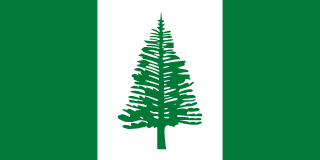 Norfolk Island →
 Australia →
A pine-covered island
Norfolk Island lies in the southwestern Pacific between New Caledonia and New Zealand, 1,676 km northeast of Sydney. It is a volcanic island about 8 km long and 5 km wide, ringed by cliffs, and rises to Mount Bates at 319 m. Kingston, in the south, is the main settlement and seat of government.[1]
James Cook found it uninhabited in 1774 and named it after the Duke of Norfolk, noting its flax and its tall pines, which looked good for ships’ masts. The Norfolk Island pine is still the island’s best-known tree.[1]
Two prisons, then the Pitcairners
Britain claimed the island in March 1788, weeks after the First Fleet reached Australia, and sent a party of seven free settlers and 15 convicts. The settlement grew to 1,100 people but was hard to supply, with no safe harbour, and the last settlers left in 1814.[2]
A second penal settlement opened in 1824 for the worst convicts from New South Wales and Van Diemen’s Land, and became notorious for its brutality. Its last convicts were removed by May 1855.[2][1]
The people of Pitcairn Island, descended from the HMS Bounty mutineers and the Tahitians who went with them, had outgrown their island and asked Britain for help. In 1856 Queen Victoria made Norfolk Island “a distinct and separate settlement”, and 194 Pitcairners arrived that June. Each family was given land, and the island still celebrates their arrival every 8 June as Anniversary Day, or Bounty Day.[2]
At first the islanders ran things much as they had on Pitcairn, with a meeting of all adults, called the House, deciding by majority. In 1896–97 Britain placed the island under the governor of New South Wales, against strong local opposition, and in 1913 Australia’s parliament accepted it as an Australian territory.[2] Today about a quarter of residents say they have Pitcairn ancestry.[2]
Self-government, and its end
After a Royal Commission in 1976, the Norfolk Island Act 1979 created an elected Legislative Assembly of nine members and a local government drawn from it. Over the next two decades it took on many jobs normally done by Australian states and even by the Commonwealth, such as immigration, customs and social security. Islanders told the committee that there was no income tax: the island lived on tourism, stamps, its own goods and services tax and duties.[2]
As its finances worsened, the island’s government asked Australia for a loan in 2010. One islander told a later inquiry that the minister’s answer was no money unless Norfolk paid Australian taxes and joined the Australian welfare system. In October 2014 a parliamentary committee reported little progress on the reforms agreed in 2011 and recommended ending self-government. The Legislative Assembly opposed this, but in 2015 Australia amended the 1979 Act, abolished the Assembly and removed the Act’s preamble recognising the Pitcairn descendants, a step still deeply felt by some islanders.[2]
An interim advisory council of five islanders bridged the gap until July 2016, when a regional council run under New South Wales local government law took over.[3] It ran short of money after costly airport and road repairs. In February 2021 it was put under an administrator, and in December 2021, after a public inquiry, its elected councillors were dismissed.[3]
In 2023 a Norfolk Island Governance Committee was set up with three elected islanders and three appointees of the Australian and Queensland governments, to plan the island’s future government.[4][5] The Australian Parliament’s committee titled its report on the island’s governance Restoring Democracy, and noted that no arrangement for governing the island had lasted much more than four decades.[2]
Timeline
1774
Cook
James Cook finds the island uninhabited and names it.[1]
1788
First settlement
Britain claims the island and sends convicts and free settlers.[2]
1814
Abandoned
The last settlers of the first settlement leave.[2]
1824
Second prison
A penal settlement for the worst convicts opens; it closes by 1855.[2]
1856
Pitcairners arrive
194 people from Pitcairn Island settle; 8 June is still Bounty Day.[2]
1897
New South Wales
The island’s affairs are put under the governor of New South Wales.[2]
1913
Australian territory
Australia’s Norfolk Island Act accepts it as a territory.[2]
1979
Legislative Assembly
The Norfolk Island Act 1979 creates an elected nine-member assembly.[2]
2015
Self-government ends
2016
Regional council
A council under New South Wales local government law takes over in July.[3]
2021
Council dismissed
After a public inquiry, the elected council is dismissed in December.[3]
More autonomous regions
- Aceh
- Åland
- Aosta Valley
- Azores and Madeira
- Bangsamoro
- Basque Country
- Bermuda
- Bougainville
- Canary Islands
- Catalonia
- Chechnya
- Corsica
- Faroe Islands
- Gagauzia
- Greenland
- Karakalpakstan
- Kurdistan Region
- Mount Athos
- Nakhchivan
- Nevis
- New Caledonia
- Nicaragua’s Caribbean Coast
- Niue
- Northern Ireland
- Nunavut
- Puerto Rico
- Puntland
- Scotland
- South Tyrol
- Tatarstan
- Vojvodina
- Wales
- Why the Northern Territory isn’t a state
- Zanzibar
Sources
- [1]Norfolk Island · Encyclopaedia Britannica
- [2]Restoring Democracy: Inquiry into local governance on Norfolk Island, chapter 2, Background · Parliament of Australia, Joint Standing Committee on the National Capital and External Territories
- [3]Restoring Democracy: Inquiry into local governance on Norfolk Island, chapter 3, Norfolk Island Regional Council · Parliament of Australia, Joint Standing Committee on the National Capital and External Territories
- [4]Restoring Democracy: Inquiry into local governance on Norfolk Island, chapter 1, Introduction · Parliament of Australia, Joint Standing Committee on the National Capital and External Territories
- [5]Restoring Democracy: Inquiry into local governance on Norfolk Island, chapter 5, Governance models · Parliament of Australia, Joint Standing Committee on the National Capital and External Territories
Map geometry from Natural Earth via world-atlas. See credits.