Amazon rainforest countries
The eight countries that share the world’s largest tropical rainforest and signed a treaty to look after it together, with Brazil holding about 60 percent, and French Guiana, part of France, as the one piece left over.
8 countriesAs of September 2026Short notes, not sourcedSuggest a correction
The Amazon is the largest tropical rainforest in the world, about 5.5 million square kilometres of forest in a basin of around 7 million. It holds roughly one in ten of the world’s known species, and the Amazon River carries more water than any other, about a fifth of all the fresh water that rivers pour into the oceans.
In 1978 the eight countries that share it signed the Amazon Cooperation Treaty, and in 1995 they set up the Amazon Cooperation Treaty Organization, based in Brasília. Those eight are the countries on this list. Large parts of the forest, especially in Brazil and Bolivia, have been cleared for cattle, soy and mining, and scientists warn that more loss could turn some of what remains into dry savanna.
Brazil1
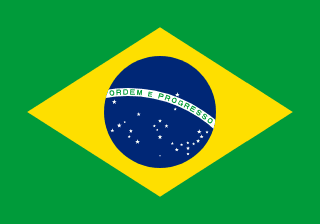 Brazil
Has about 60 percent of the forest. Manaus, a city of two million in the middle of it, is where the dark Rio Negro meets the muddy Solimões, and the two flow side by side for kilometres before they mix.
The Andean edge4
Countries where the rainforest climbs the eastern slopes of the Andes, where the Amazon’s headwaters begin.
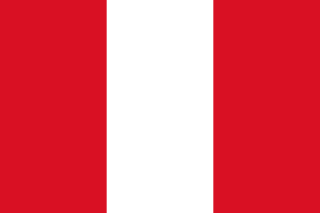 Peru
PeruHas the second-largest share. The Amazon’s most distant source is in the Peruvian Andes, and Iquitos, on the river, is the largest city in the world that no road reaches.
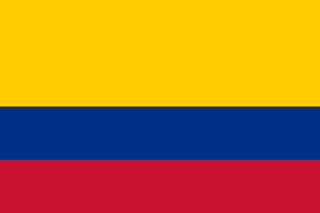 Colombia
More than a third of the country is Amazon forest. Leticia, its river port, is where Colombia, Peru and Brazil meet.
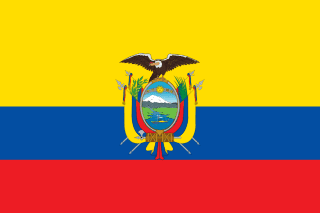 Ecuador
Its Amazon region, the Oriente, holds Yasuní National Park, one of the most biodiverse places on Earth. In 2023 voters chose to stop oil drilling in part of it.
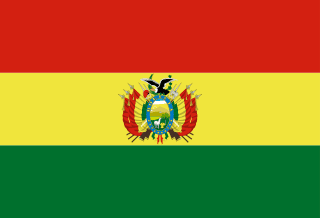 Bolivia
Most of its lowland north is Amazon forest, and much has been lost to farm fires and clearing.
The Guiana Shield3
Old, rocky uplands in the north, where the forest drains partly into the Amazon and partly straight to the Atlantic or the Orinoco.
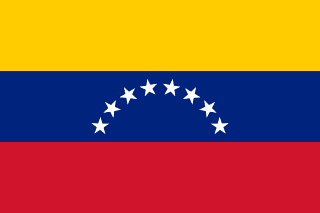 Venezuela
Its southern states are Amazon forest. Angel Falls, the world’s tallest waterfall, is on the Guiana Shield in the south-east.
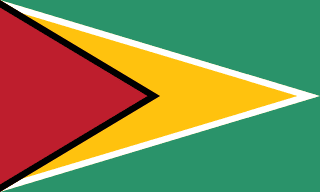 Guyana
More than four-fifths forest. Most of its rivers flow to the Atlantic rather than the Amazon, but its forest counts as part of greater Amazonia.
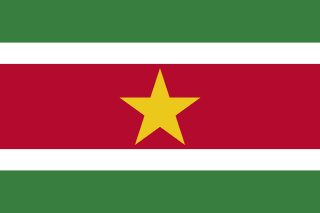 Suriname
The most heavily forested country in the world by share of land, with forest over more than nine-tenths of it.
Close calls
France
French Guiana, between Suriname and Brazil, is Amazon rainforest too, but it’s an overseas region of France, not a country of its own. France isn’t a party to the Amazon Cooperation Treaty, so it isn’t counted here, but it does give France a land border with Brazil, its longest.
The river and the forest
The Amazon River’s basin and the Amazon rainforest don’t quite line up. Guyana and Suriname are mostly outside the basin but inside the forest, and the basin reaches into the Andes and dry savannas where there is no rainforest at all.
Longer than the Nile?
The Amazon is about 6,400 km long, or longer depending on which headwater is counted, and some measurements have put it ahead of the Nile. Most reference books still list the Nile as the longest river.
More country lists
- Andean countries
- Arab League member states
- Arctic Ocean countries
- ASEAN member countries
- Atlantic Ocean countries
- Baltic Sea countries
- Black Sea countries
- BRICS member countries
- Caribbean Sea countries
- Commonwealth member countries
- Countries in the Arctic Circle
- Countries in the European Union
- Countries of the former Yugoslavia
- Countries on the Equator
- Countries that drive on the left
- Countries that use the euro
- Countries with a monarch
- Countries with nuclear weapons
- Danube countries
- FIFA World Cup host countries
- Former Soviet republics
- G20 member countries
- Indian Ocean countries
- Island nations
- Landlocked countries
- Mediterranean countries
- Mekong countries
- NATO member countries
- OECD member countries
- OPEC member countries
- Pacific Ocean countries
- Persian Gulf countries
- Red Sea countries
- Sahara Desert countries
- Schengen Area countries
- Summer Olympics host countries
- Winter Olympics host countries