Sahara Desert countries
The ten countries with a share of the world's largest hot desert: the North African coast that backs onto it, the countries along its southern rim, and Western Sahara, which is all desert but not on the list.
10 countriesAs of September 2026Short notes, not sourcedSuggest a correction
The Sahara covers about 9 million square kilometres, most of North Africa from the Atlantic to the Red Sea, and is about as big as China or the United States. Only the polar deserts of Antarctica and the Arctic are larger. Sand dunes, called ergs, make up only about a quarter of it. The rest is gravel plains, bare rock plateaus, dry valleys, salt flats and mountains.
It hasn't always been desert. Between roughly 11,000 and 5,000 years ago the monsoon reached much further north and the Sahara was green, with lakes, grassland, hippos and people, whose rock paintings survive in the middle of it. Its southern edge still moves from decade to decade as the rains in the Sahel come and go.
North Africa5
Coastal countries where most people live near the Mediterranean or the Nile, with the desert behind them.
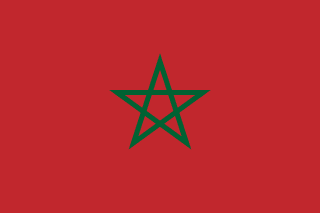 Morocco
The Sahara reaches its south-east, where the dunes of Erg Chebbi rise near Merzouga. Morocco also controls most of Western Sahara, whose status is disputed.
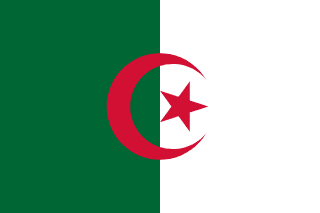 Algeria
The largest country in Africa, and more than four-fifths Sahara. The Tassili n’Ajjer plateau holds thousands of rock paintings from the green Sahara.
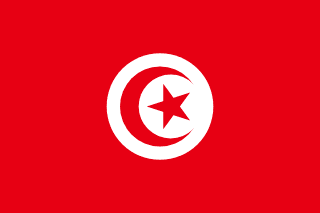 Tunisia
Its south runs into the Grand Erg Oriental and the Chott el Djerid salt flat. Star Wars filmed Luke Skywalker's home planet here and named it after the town of Tataouine.
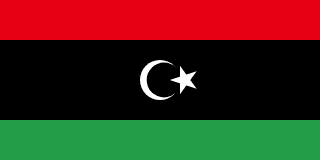 Libya
LibyaAbout nine-tenths desert. El Azizia held the record for the hottest temperature ever measured, 58 °C in 1922, until the World Meteorological Organization threw it out in 2012.
 Egypt
EgyptAlmost everyone lives along the Nile and its delta. West of the river is the Western Desert, with the Siwa Oasis and the Qattara Depression, over 130 m below sea level.
The southern rim5
Countries whose north is Sahara and whose south is the Sahel, the dry grassland between the desert and the savanna.
 Mauritania
Most of the country is desert. The Richat Structure, a set of rings about 40 km across known as the Eye of the Sahara, is easy to spot from space. One of the world's longest trains carries iron ore across the desert to the port of Nouadhibou.
 Mali
MaliTimbuktu grew rich on the trade across the Sahara in gold, salt and books. Camel caravans still bring slabs of salt from the mines at Taoudenni in the far north.
 Niger
NigerThe Ténéré, in the north-east, once had the most isolated tree in the world, the Tree of Ténéré, with no other tree for hundreds of kilometres. A truck driver knocked it down in 1973.
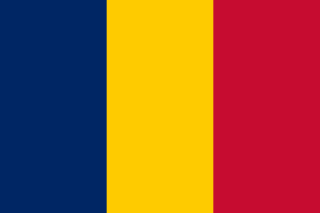 Chad
ChadThe Tibesti Mountains in the north rise to Emi Koussi, the Sahara's highest point at about 3,400 m. The Bodélé Depression, the dry bed of a much bigger ancient Lake Chad, is the dustiest place on Earth, and its dust blows as far as the Amazon.
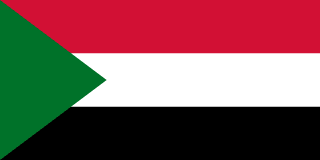 Sudan
SudanThe Nubian Desert covers its north-east. Sudan has more pyramids than Egypt, built by the kings of Kush at sites like Meroë.
Close calls
Western Sahara
Entirely desert, but a disputed territory rather than one of the 197 countries on the list. Morocco controls most of it, and the Polisario Front, backed by Algeria, claims it as the Sahrawi Arab Democratic Republic.
The Sahel
Senegal, Burkina Faso and Nigeria all reach up towards the desert, but their dry north is Sahel, not Sahara. Where exactly one ends and the other begins is a matter of rainfall, and it shifts from decade to decade.
A growing desert
A 2018 study of rainfall records found the Sahara had grown by about a tenth since 1920, mostly by pushing south into the Sahel. Some of that is natural swings in the climate, and some may be climate change.
Deserts that aren't the Sahara
The Arabian Desert across the Red Sea looks like the Sahara and is part of the same belt of desert, but it's a separate desert, and Saudi Arabia, Yemen and Oman aren't on the list. The Namib and Kalahari, in southern Africa, are separate too.