Countries in the European Union
The 27 member states of the European Union, in the order they joined: six founders in 1958, seven waves of enlargement, and the one country that has left.
27 countriesAs of September 2026Short notes, not sourcedSuggest a correction
The European Union has 27 member countries. It began as the European Economic Community (EEC), a common market set up by the Treaty of Rome, which six countries signed in 1957 and which took effect on 1 January 1958. The Maastricht Treaty turned it into the European Union in 1993.
Joining takes years. A country has to be European, a stable democracy with the rule of law, and able to take on the whole body of EU law, and every existing member has to agree. The countries below are grouped by the year they joined.
Founders (1958)6
The six countries that signed the Treaty of Rome in 1957.
 Belgium
Brussels hosts the European Commission and the Council, and is the EU’s de facto capital.
 Germany
Joined as West Germany. East Germany became part of the EU when Germany reunified on 3 October 1990, without a separate accession.
 Italy
ItalyThe treaty that founded the EEC was signed in Rome.
 Luxembourg
Home to the EU’s Court of Justice.
 Netherlands
The Maastricht Treaty that created the EU was signed in the Dutch city of Maastricht in 1992.
19732
The first enlargement. The United Kingdom joined in the same wave and left in 2020 (see below).
 Denmark
Its self-governing territories, Greenland and the Faroe Islands, are outside the EU.
19811
 Greece
Joined seven years after its military government fell in 1974.
19862
Both joined about a decade after the end of their dictatorships.
19953
Three countries that had stayed out during the Cold War.
 Finland
The Åland Islands are inside the EU but keep special tax rules.
200410
The biggest enlargement: ten countries on one day, 1 May 2004, most of them in Central and Eastern Europe.
 Cyprus
The whole island joined, but EU law is suspended in the north, which the Republic of Cyprus doesn’t control.
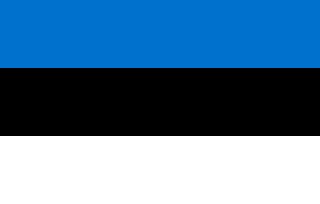 Estonia
One of three former Soviet republics in the EU, with Latvia and Lithuania.
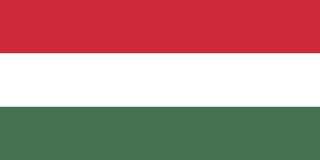
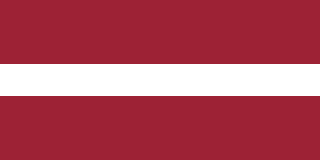
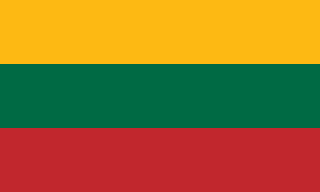
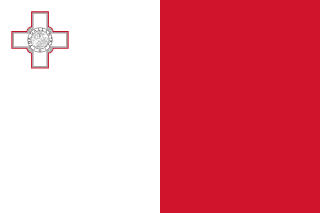 Malta
MaltaThe smallest EU country by both area and population.
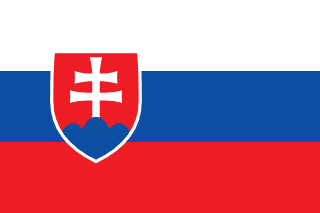
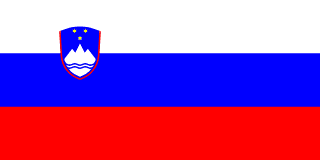 Slovenia
The first former Yugoslav republic to join.
20072
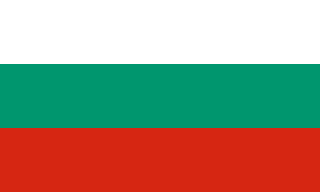 Bulgaria
Adopted the euro on 1 January 2026.
20131
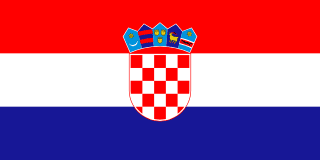 Croatia
The newest member, which joined on 1 July 2013.
Close calls
The United Kingdom left
The UK joined in 1973, voted to leave in a referendum on 23 June 2016, and left on 31 January 2020. It is the only member state that has ever left. Northern Ireland still follows some EU rules on goods, to keep its land border with Ireland open.
Greenland walked out first
Greenland joined in 1973 as part of Denmark, against the wishes of most Greenlanders. Once it had home rule it held a referendum in 1982, and it left the European Community on 1 February 1985, mainly over fishing. It remains part of the Kingdom of Denmark.
Part of the EU, far from Europe
Some of the EU is on other continents. France’s overseas regions, French Guiana, Guadeloupe, Martinique, Réunion and Mayotte, are fully part of the EU, and so is the French side of Saint Martin. French Guiana gives the EU a land border with Brazil and Suriname.
Close, but not members
Norway voted no to joining twice, in 1972 and 1994. Norway, Iceland and Liechtenstein are in the single market through the European Economic Area, and Switzerland has its own set of treaties with the EU. Andorra, Monaco, San Marino and Vatican City use the euro under agreements with the EU without being members.
Waiting to join
Several countries are official candidates, among them Ukraine, Moldova, Montenegro, Albania, Serbia and North Macedonia. Turkey has been a candidate since 1999, but its membership talks have been frozen since 2018.
Not every member uses the euro or Schengen
21 of the 27 use the euro. Denmark has a legal opt-out, and the other five have yet to meet the conditions. Most members are also in the Schengen Area of passport-free travel, but Ireland and Cyprus are not.