Countries with a monarch
The kingdoms, emirates, sultanates and principalities, plus the fifteen countries that share a king. From monarchs who rule outright to monarchs who mostly cut ribbons.
43 countriesAs of September 2026Short notes, not sourcedSuggest a correction
A monarchy is a country whose head of state is a monarch: a king or queen, an emperor, an emir, a sultan, a prince or a grand duke, usually holding the post for life and usually inheriting it. Around one country in five still has one.
What the monarch actually does varies enormously. In Saudi Arabia, Oman, Brunei, Eswatini and the Vatican the monarch rules. In Sweden or Japan the monarch has no political power at all. Most monarchies sit somewhere in between.
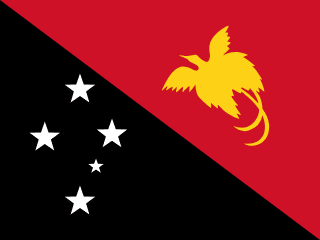
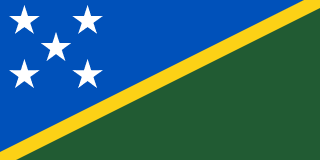
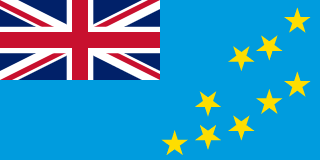
Commonwealth realms15
Fifteen countries with the same monarch, King Charles III. Outside the United Kingdom, a governor-general usually carries out his duties.
 United Kingdom
Charles III has been king since 8 September 2022, of the United Kingdom and of the fourteen realms below.
 Australia
Voted to keep the monarchy in a referendum in 1999.
Europe11
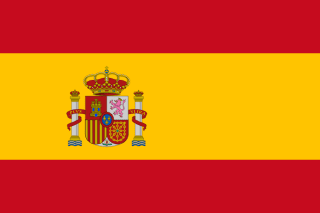 Spain
SpainThe monarchy was restored in 1975, after Franco’s death.
 Sweden
The king has no political role at all. Since 1980 the eldest child inherits the throne, whether a son or a daughter.
 Norway
Chose its own king when it separated from Sweden in 1905: a Danish prince, who took the name Haakon VII.
 Denmark
Queen Margrethe II abdicated in January 2024 and her son became King Frederik X.
 Belgium
The monarch is “King of the Belgians”, not “King of Belgium”.
 Luxembourg
The only grand duchy in the world.
 Liechtenstein
Its prince keeps more real power than any other European monarch apart from the pope.
 Monaco
Ruled by the Grimaldi family since the 13th century.
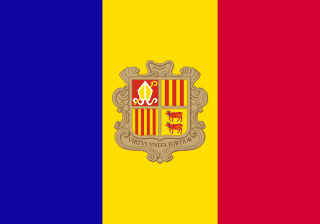 Andorra
It has two co-princes: the President of France and the Bishop of Urgell in Spain.
 Vatican City
The pope is an elected monarch, chosen for life by the cardinals, with full authority over the state.
The Middle East7
Every country on the Arabian Peninsula except Yemen, plus Jordan.
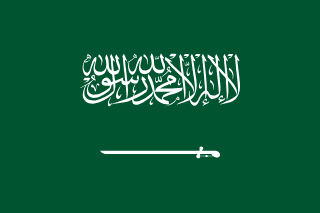 Saudi Arabia
Named after its ruling family, the House of Saud.
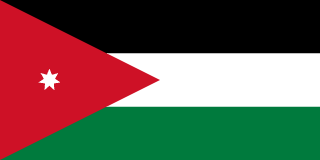 Jordan
The Hashemite Kingdom, ruled by a family that traces its descent to the Prophet Muhammad.
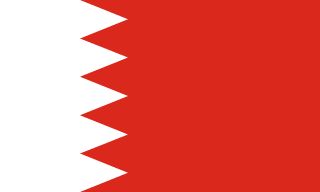 Bahrain
An emirate that became a kingdom in 2002.
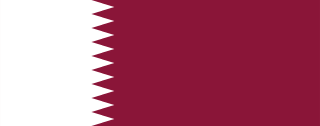
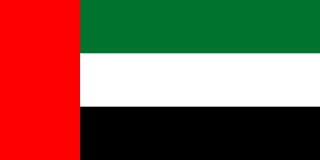 United Arab Emirates
A federation of seven emirates, each with its own ruler. The rulers choose the federation’s president from among themselves.
 Oman
OmanA sultanate.
Asia6
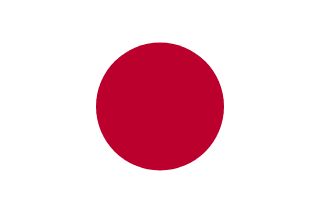 Japan
JapanThe only emperor left in the world.
 Bhutan
Its kings date from 1907, and it became a constitutional monarchy in 2008.
 Cambodia
The monarchy was abolished in 1970 and restored in 1993.
 Malaysia
The king is elected for five years by the rulers of nine of Malaysia’s states, from among themselves.
 Brunei
The sultan is also the prime minister.
Africa3
 Eswatini
Africa’s last absolute monarchy.
Oceania1
Leaving aside the realms that share the British monarch.
 Tonga
TongaThe only kingdom in the Pacific, and never formally a colony.
Close calls
Recent republics
Barbados removed the British monarch as head of state on 30 November 2021 and became a republic within the Commonwealth. Mauritius and Trinidad and Tobago did the same decades earlier. Nepal abolished its monarchy in 2008.
Samoa
Samoa’s first heads of state were paramount chiefs who held the post for life. Since 2007 parliament has elected the head of state for a five-year term, so Samoa isn’t counted as a monarchy.
Monarchs without a country
Many kings and queens reign over part of a country. They include the rulers of Malaysia’s states and of the emirates in the UAE, the Zulu king in South Africa, the Kabaka of Buganda in Uganda, and many traditional rulers in Nigeria and Ghana. They aren’t heads of state, so their countries aren’t on the list.