Former Soviet republics
The fifteen countries that were republics of the Soviet Union until it broke up in 1991: the Baltic three that led the way out, the Central Asian five that hardly asked to leave, and the countries that were never republics.
15 countriesAs of September 2026Short notes, not sourcedSuggest a correction
The Union of Soviet Socialist Republics was, on paper, a federation of fifteen republics, each with its own flag, capital and parliament, and each with a constitutional right to leave. For most of its history that right meant nothing. Moscow ran the country, and the republics' borders mattered mostly on maps.
That changed in 1991. After a failed coup against Mikhail Gorbachev in August, republic after republic declared independence. On 8 December the leaders of Russia, Ukraine and Belarus signed the Belovezha Accords, declaring that the Soviet Union had ceased to exist. Gorbachev resigned on 25 December, and the next day the union was formally dissolved. The fifteen republics became fifteen countries, inside the borders they already had.
Eastern Europe4
The three Slavic republics that signed the union's end, and Moldova.
 Russia
By far the largest republic, with about half the Soviet population. It took over the Soviet Union's seat on the UN Security Council, its embassies and its nuclear arsenal.
 Ukraine
Voted for independence by more than 90% in a referendum on 1 December 1991. Crimea had been transferred to it from Russia in 1954, when both were Soviet republics.
 Belarus
The Belovezha Accords were signed at a hunting lodge in its Białowieża Forest. Belarus and Ukraine had both had their own seats at the UN since 1945, while still part of the Soviet Union.
 Moldova
Most of it had been Romanian between the world wars. The strip east of the Dniester broke away as Transnistria after a short war in 1992, and is still outside the government's control.
The Baltic states3
Independent between the world wars, annexed by the Soviet Union in 1940, and the first to leave.
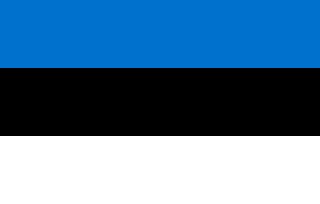 Estonia
Its “Singing Revolution” of mass song festivals in the late 1980s was one of the first open independence movements in the union.
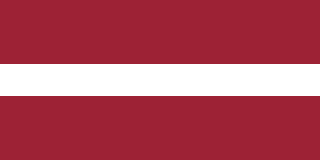 Latvia
On 23 August 1989, around two million people joined hands in the Baltic Way, a human chain of about 675 km from Tallinn through Riga to Vilnius.
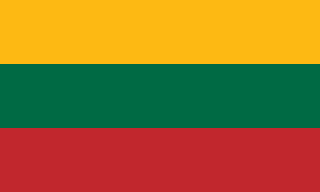 Lithuania
The first republic to declare independence, on 11 March 1990. Soviet troops attacked the Vilnius TV tower in January 1991, killing 14 people, but it held on.
The Caucasus3
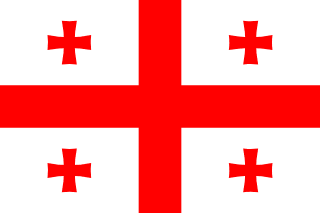 Georgia
Stalin was born here, in Gori. It declared independence in April 1991. Abkhazia and South Ossetia broke away in wars in the early 1990s and 2008.
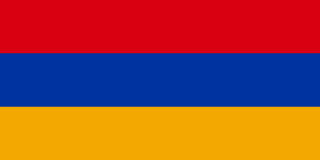 Armenia
Fought Azerbaijan over Nagorno-Karabakh from the late 1980s, while both were still Soviet republics.
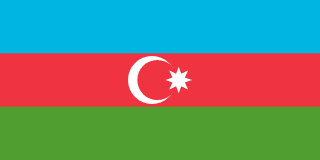 Azerbaijan
Baku was one of the world's first great oil cities. Nakhchivan, part of Azerbaijan, is cut off from the rest of it by Armenia.
Central Asia5
Five republics whose borders Moscow drew in the 1920s and 1930s. Their leaders mostly wanted to keep the union, and became independent when it fell apart around them.
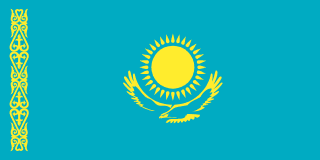 Kazakhstan
The last republic to declare independence, on 16 December 1991. The Soviet space programme launched from Baikonur here, which Russia still leases.
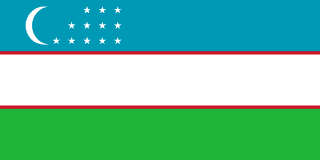 Uzbekistan
The most populous of the five, home to the Silk Road cities of Samarkand and Bukhara.
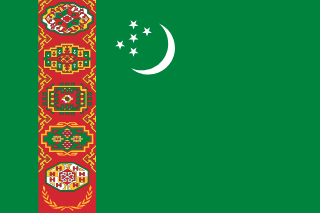 Turkmenistan
Declared itself permanently neutral, which the UN General Assembly recognised in 1995.
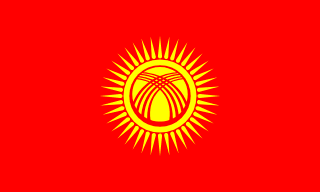 Kyrgyzstan
Shares the densely populated Fergana Valley with Uzbekistan and Tajikistan, where the Soviet borders wind in and out of each other.
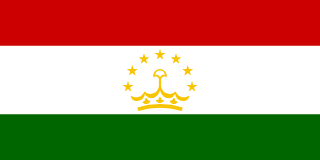 Tajikistan
Went through a civil war from 1992 to 1997, soon after independence.
Close calls
The Eastern Bloc
Poland, East Germany, Czechoslovakia, Hungary, Romania and Bulgaria were Soviet allies under communist governments, and members of the Warsaw Pact, but they were separate countries, never part of the Soviet Union. So was Mongolia. None of them is on the list.
A sixteenth republic
From 1940 to 1956 there was a Karelo-Finnish Soviet Socialist Republic, made largely of land taken from Finland. It was then folded back into Russia as an autonomous republic, so there were fifteen when the union ended.
Republics inside Russia
Tuva was a nominally independent country until the Soviet Union annexed it in 1944. It, Chechnya, Tatarstan and many others are republics inside Russia today, not former Soviet republics of their own.
Breakaway states
Transnistria, Abkhazia and South Ossetia run their own affairs, but almost no other country recognises them. They're counted with Moldova and Georgia.
Did the Baltics ever join?
Estonia, Latvia and Lithuania say they were occupied rather than joined in 1940, and most Western countries never recognised the annexation. They count as former Soviet republics here because that's what they were in the union's own constitution. They are the only three that later joined the EU and NATO, in 2004.