Countries of the former Yugoslavia
The seven countries that came out of Yugoslavia: the four republics that left in 1991–92, the two that stayed together until 2006, and Kosovo, which was never a republic at all.
7 countriesAs of September 2026Short notes, not sourcedSuggest a correction
Yugoslavia, the land of the South Slavs, was put together after the First World War from Serbia, Montenegro and the South Slav lands of Austria-Hungary. After the Second World War, Josip Broz Tito rebuilt it as a communist federation of six republics: Slovenia, Croatia, Bosnia and Herzegovina, Serbia, Montenegro and Macedonia. Serbia also contained two autonomous provinces, Vojvodina and Kosovo.
Tito died in 1980. Over the next decade the economy failed and nationalist politicians rose in the republics, and in 1991 the federation began to come apart. The wars that followed, from 1991 to 2001, killed around 140,000 people. Today seven countries stand where Yugoslavia did.
Left in 1991–924
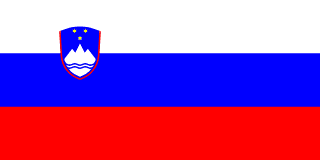 Slovenia
The richest republic, and the first to go. It declared independence on 25 June 1991 and won it in the Ten-Day War. It joined the EU in 2004 and the euro in 2007.
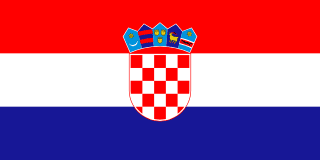 Croatia
Declared independence the same day as Slovenia, then fought a war until 1995 with Serb forces holding about a quarter of its land. It is the EU's newest member, since 2013.
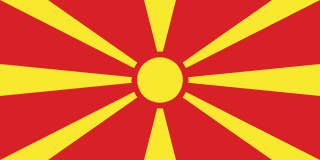 North Macedonia
The only republic to leave without a war, after a referendum in September 1991. Greece objected to the name Macedonia, so it joined the UN in 1993 as “the former Yugoslav Republic of Macedonia”, and became North Macedonia in 2019.
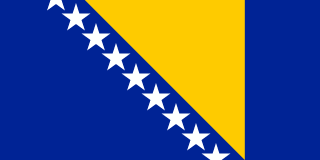 Bosnia and Herzegovina
The most mixed republic, of Bosniaks, Serbs and Croats. Its declaration of independence in March 1992 was followed by the worst of the wars, including the siege of Sarajevo and the Srebrenica genocide. The 1995 Dayton Agreement ended it, splitting the country into two entities under one state.
Stayed together2
The last two republics kept a smaller Yugoslavia going until 2003, then a loose union until 2006.
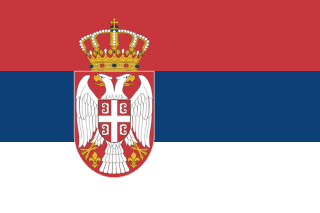 Serbia
Belgrade was Yugoslavia's capital. Serbia was the core of the Federal Republic of Yugoslavia from 1992, renamed Serbia and Montenegro in 2003, and became independent on its own when Montenegro left.
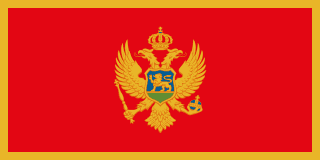 Montenegro
Voted to leave Serbia on 21 May 2006 by 55.5%, just over the 55% the EU had set. It uses the euro without being in the eurozone.
The province1
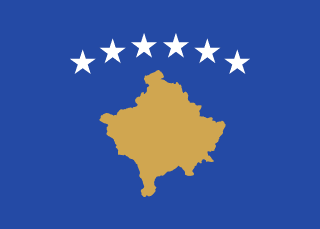 Kosovo
An autonomous province of Serbia, not a republic. After the Kosovo War and NATO's bombing of Yugoslavia in 1999, it was run by the UN. It declared independence on 17 February 2008. Serbia doesn't recognise it, and it isn't a UN member.
Close calls
“Former Yugoslav republic”
Strictly speaking Yugoslavia had six republics, and Kosovo wasn't one of them. It's on the list because it is one of the independent countries that came out of Yugoslavia, which is what the Grid's clue means.
Vojvodina
Serbia's other autonomous province, in the north around Novi Sad, never broke away. It is still part of Serbia, with its own assembly.
Republika Srpska
The Serb-majority entity of Bosnia and Herzegovina has its own president, parliament and police. It's part of Bosnia and Herzegovina, not a separate country.
Albania
Communist too, and a Balkan neighbour, but always a separate country. It broke with Yugoslavia in 1948 and was one of the most closed countries in Europe until 1991.
Czechoslovakia
The other federation that split in the early 1990s, sometimes mixed up with Yugoslavia. It divided peacefully into the Czech Republic and Slovakia on 1 January 1993.