NATO member countries
The 32 members of the North Atlantic Treaty Organization, in the order they joined: twelve founders in 1949, then ten rounds of enlargement, most recently Finland and Sweden.
32 countriesAs of September 2026Short notes, not sourcedSuggest a correction
NATO is a military alliance of 32 countries in Europe and North America. It was founded by the North Atlantic Treaty, signed in Washington on 4 April 1949, as the Cold War began.
The heart of the treaty is Article 5: an armed attack on one member in Europe or North America counts as an attack on them all, and each member will help in the way it judges necessary. It has been invoked once, the day after the attacks on the United States on 11 September 2001. New members need the agreement of every existing one.
Founders (1949)12
The twelve countries that signed the treaty in 1949.
 Belgium
NATO’s headquarters has been in Brussels since 1967.
 Denmark
Its membership covers Greenland, where the United States runs Pituffik Space Base.
 France
Left NATO’s integrated military command in 1966 and moved the alliance’s headquarters out of France. It returned to the command in 2009.
 Iceland
The only member with no army of its own. It contributes its location and a coast guard.
 Norway
The only founder that bordered the Soviet Union.
 Portugal
Joined while still a dictatorship under Salazar.
 United States
The treaty was signed in Washington, D.C., and the United States is its depositary.
Cold War enlargements4
Four countries joined in 1952, 1955 and 1982.
 Greece
Joined in 1952. It left NATO’s military command from 1974 to 1980 over the Turkish intervention in Cyprus.
 Türkiye
Joined in 1952. It has NATO’s second-largest armed forces, after the United States.
 Germany
West Germany joined in 1955. East Germany became part of NATO when Germany reunified in 1990.
 Spain
SpainJoined in 1982, and confirmed membership in a referendum in 1986.
1999 and 200410
Former Warsaw Pact countries and three former Soviet republics, after the Cold War ended.
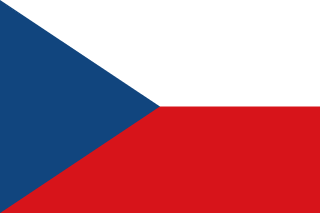 Czechia
Joined in 1999.
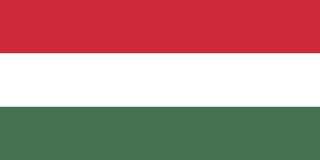 Hungary
Joined in 1999.
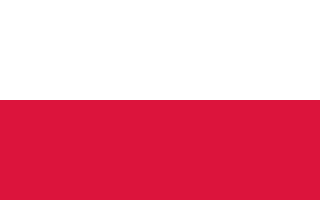 Poland
Joined in 1999.
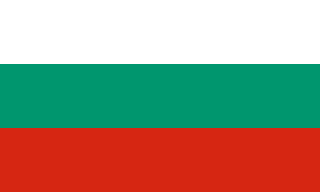 Bulgaria
Joined in 2004.
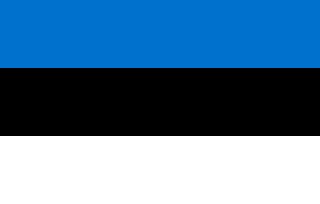 Estonia
Joined in 2004, one of three former Soviet republics in NATO.
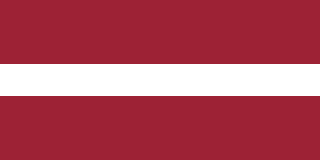 Latvia
Joined in 2004.
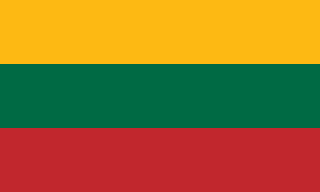 Lithuania
Joined in 2004. It borders Russia’s Kaliningrad exclave.
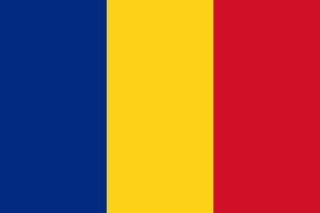 Romania
Joined in 2004.
 Slovakia
Joined in 2004.
 Slovenia
Joined in 2004, the first former Yugoslav republic in NATO.
The Balkans (2009–2020)4
 Albania
Joined in 2009.
 Croatia
Joined in 2009.
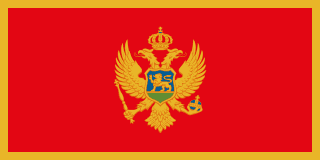 Montenegro
Joined in 2017.
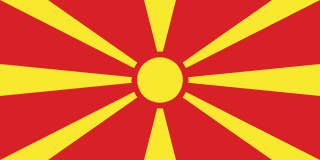 North Macedonia
Joined in 2020, after changing its name from Macedonia to settle a long dispute with Greece, which had blocked it.
The Nordic enlargement (2023–24)2
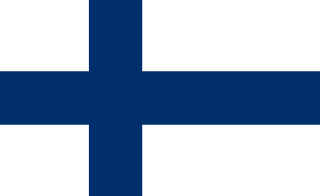
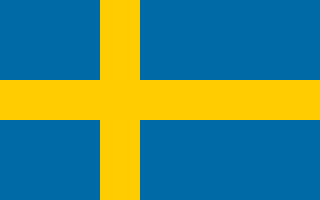
Two long-neutral countries that applied together in May 2022, after Russia’s full-scale invasion of Ukraine.
Close calls
Promised, not invited
At the Bucharest summit in April 2008, NATO declared that Ukraine and Georgia “will become members”, but it never set a date or gave either one a Membership Action Plan. Both remain partners, not members.
In the EU, out of NATO
Four EU countries have stayed out of NATO: Austria, Ireland and Malta, which are neutral, and Cyprus. All but Cyprus work with NATO through its Partnership for Peace programme.
Where Article 5 doesn’t reach
The treaty covers members’ territory in Europe and North America, and islands in the North Atlantic north of the Tropic of Cancer. That’s why Hawaii and the Falkland Islands fell outside it, and why the United Kingdom fought the 1982 Falklands War without NATO being involved.
Russia
Russia and NATO set up a joint council in 2002. NATO suspended practical cooperation with Russia in 2014, after Russia annexed Crimea.